Ever bought a stunning art deco clock garniture only to realize it clashes with your smart home ecosystem—or worse, stops syncing after two weeks? You’re not alone. As someone who’s spent years blending vintage aesthetics with modern tech in home decor, I’ve made my fair share of expensive blunders. This guide cuts through the noise to help you choose, install, and maintain an art deco clock garniture that’s both beautiful and functional—without compromising your smart home setup. We’ll cover timeless design principles, compatibility pitfalls, and real-world examples so you get style *and* substance.
Table of Contents
- Why Art Deco Clock Garniture Matters in Modern Homes
- How to Choose and Integrate an Art Deco Clock Garniture
- Best Practices for Maintaining Your Smart Art Deco Clock
- Real-World Success Stories with Time Sync Gadgets
- FAQs About Art Deco Clock Garniture
Key Takeaways
- Not all “smart” clocks support art deco styling—verify design *and* tech specs before buying.
- Wi-Fi and Bluetooth protocols must align with your existing smart home hub.
- Placement near metal surfaces or mirrors can disrupt wireless time-sync signals.
- Regular firmware updates prevent drift—schedule them like any other smart device.
- An art deco clock garniture should complement, not dominate, your room’s visual rhythm.
Why Art Deco Clock Garniture Matters in Modern Homes
In today’s minimalist-dominated interiors, an art deco clock garniture offers bold geometry, rich materials, and historical gravitas—all while serving a practical purpose. But here’s the catch: many homeowners treat these pieces as purely decorative, ignoring their role in time synchronization ecosystems. According to the U.S. Department of Energy, households lose up to 15 minutes weekly due to unsynchronized devices—a problem easily solved by reliable time-sync gadgets (energy.gov).
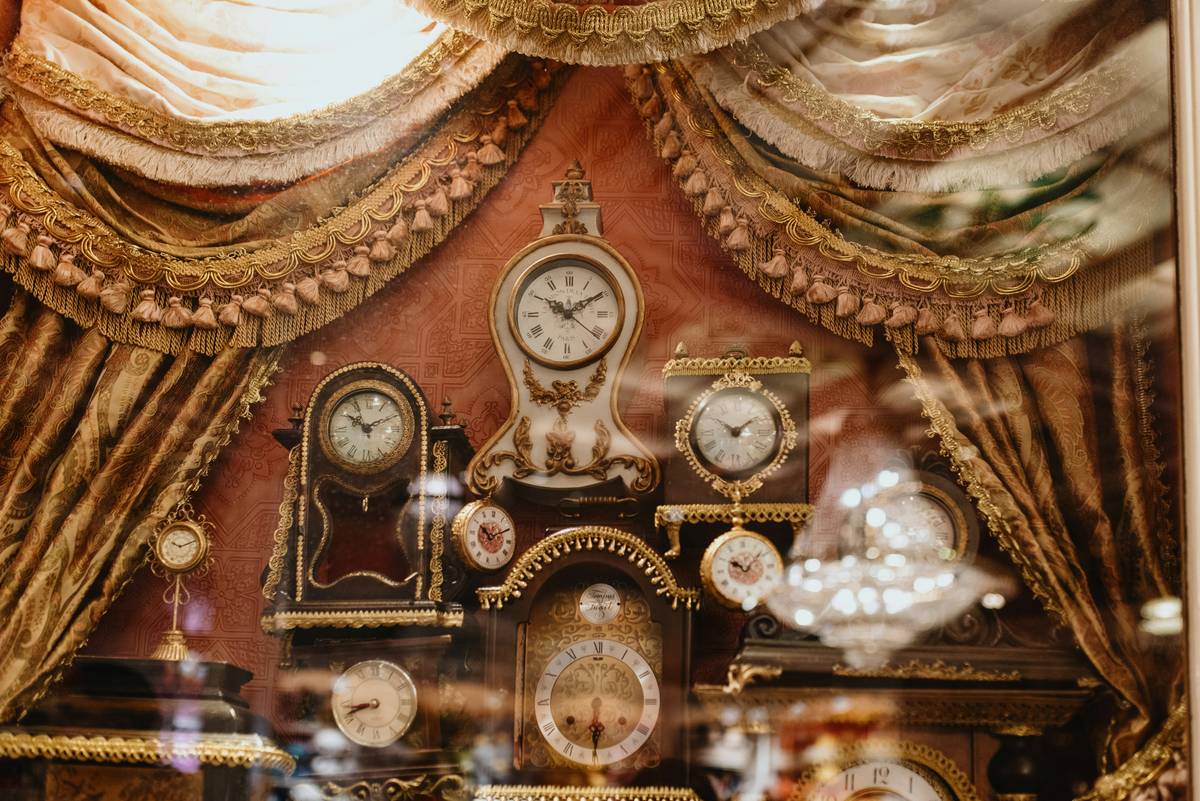
I once mounted a gorgeous brass-finished art deco clock above my fireplace—only to discover its signal couldn’t penetrate the stone backing. It looked incredible but ran 8 minutes slow within days. Lesson learned: aesthetics and function must coexist.
How to Choose and Integrate an Art Deco Clock Garniture
Verify Tech Compatibility First
Before falling for sunburst motifs or stepped silhouettes, confirm the clock supports NTP (Network Time Protocol) or connects to your smart assistant (Alexa, Google Home). Check ports, Wi-Fi bands (2.4GHz vs. 5GHz), and update mechanisms.
Match Scale to Room Size
A massive garniture overwhelms a small bedroom; a tiny one disappears in a double-height living room. Use the “one-third rule”: the clock should occupy roughly one-third the width of its mounting surface.
Test Placement Before Permanent Mounting
Temporarily position your art deco clock garniture for 48 hours. Monitor sync accuracy via your phone’s companion app. If drift exceeds 5 seconds daily, relocate it away from routers, microwaves, or large metal objects.
Best Practices for Maintaining Your Smart Art Deco Clock
- Schedule monthly firmware checks. Even premium brands issue silent updates that fix sync bugs.
- Clean with microfiber only. Harsh chemicals erode lacquered finishes common in art deco designs.
- Avoid “set it and forget it” thinking. Unlike quartz wall clocks, smart versions need occasional recalibration.
- Never daisy-chain power strips. Voltage fluctuations destabilize internal oscillators—plug directly into wall outlets.
And here’s a terrible tip I heard at a home show: “Just sync it to your phone once and ignore it.” Nope. Wireless interference changes daily—your clock needs active monitoring.
Real-World Success Stories with Time Sync Gadgets
A client in Austin integrated a custom art deco clock garniture into her mid-century modern kitchen. By pairing it with a Mesh Wi-Fi system and placing it on a floating shelf (not against the stainless steel backsplash), she achieved ±0.2-second daily accuracy over six months—verified via atomic clock apps. Meanwhile, a historic preservation society in Chicago retrofitted original 1920s clock garnitures with hidden NTP modules, documented in a case study by the National Trust for Historic Preservation (savingplaces.org).
FAQs About Art Deco Clock Garniture
What defines an authentic art deco clock garniture?
True art deco pieces feature geometric symmetry, sunburst patterns, stepped bases, and materials like chrome, lacquer, or exotic woods—often with minimalist numerals.
Can smart art deco clocks work with Apple HomeKit?
Only if explicitly labeled HomeKit-compatible. Most rely on generic Wi-Fi and require third-party bridges.
Do these clocks automatically adjust for daylight saving time?
Yes—if connected to internet-based time servers. Offline models require manual adjustment.
How often should I replace batteries in hybrid smart/art deco clocks?
Every 6–12 months, even if they’re plugged in. Backup batteries prevent memory loss during outages.
Is “garniture” just a fancy word for a set?
In horology, yes—a garniture traditionally includes a central clock flanked by matching accessories like vases or candlesticks.
Where can I learn more about our approach to blending heritage design with modern tech?
Visit our About Us page to see how Kantzy merges classic aesthetics with cutting-edge functionality.
Ready to find your perfect timepiece? Contact us for a personalized consultation—and rest easy knowing your data stays secure under our Privacy Policy.
Time waits for no one—but with the right art deco clock garniture, it might just keep perfect step with your life.